One in a Million Albino Paddlefish
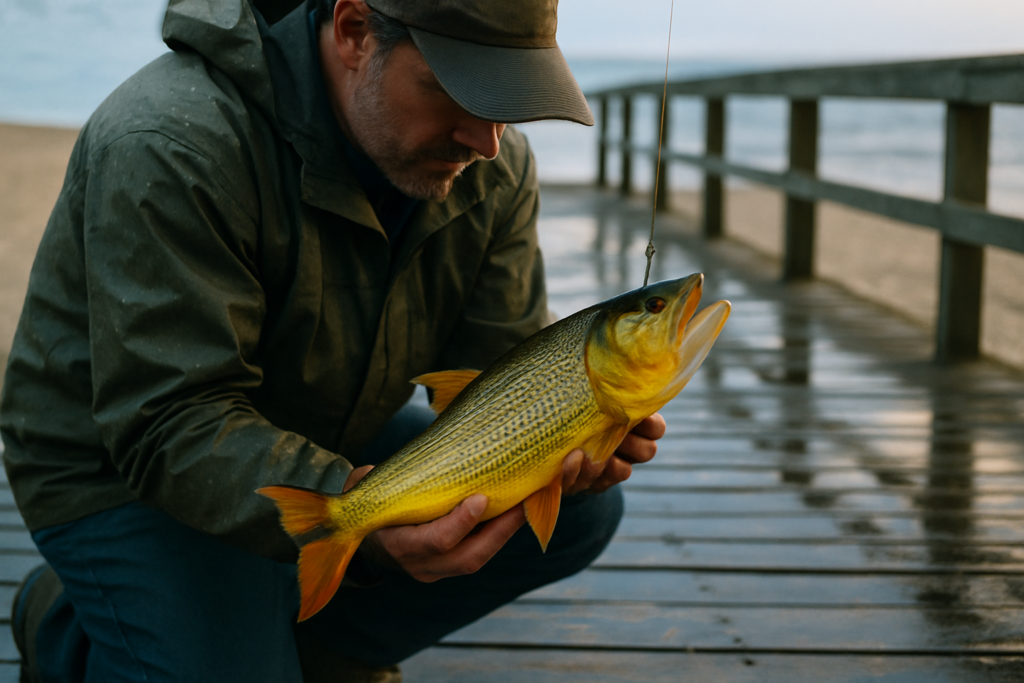
You don’t expect to pull something prehistoric looking and ghost white out of the Missouri River but that’s exactly what happened. The albino paddlefish that surfaced in late spring had anglers rubbing their eyes. Translucent skin, pale fins, and a slow, gliding movement gave it an almost unreal presence. Even lifelong fishermen paused.
Albino paddlefish are genetic anomalies, the result of rare mutations that strip skin of its normal pigmentation. But it’s more than just a cosmetic twist. These fish often suffer reduced stamina and sensory disadvantages, making survival into adulthood almost impossible in the wild. That’s what made this catch such a shock it wasn’t just rare it was extremely lucky just to be alive.
Curious about more once in a lifetime catches like this one? Check out our albino fish wonders for jaw dropping stories of nature at its strangest.
Deep Sea Oarfish off the Baja Coast
Stretching over 20 feet and rippling like a ribbon from the abyss, the oarfish is the kind of creature you’d expect in legends not on the end of a real world fishing line. It rarely comes anywhere near the surface while alive, which is why sightings especially live captures are few and spaced across years. When one turned up recently off the coast of Baja, even seasoned marine biologists took notice.
Sailors once thought oarfish were sea serpents, and honestly, it’s easy to see why. Their silvery, undulating bodies and prominent red fins look like the stuff of myth. Nowadays, though, marine biology has taken over where mythology left off. These animals dwell deep way down, usually over 600 feet so when they show up near the surface, it’s sometimes read as a red flag. Several studies and local traditions link these appearances to seismic disturbances deep beneath the ocean floor.
While there’s still debate around whether oarfish are actual quake predictors or just deep sea drifters caught in changing currents, their rare rise from the depths always turns heads and, in some circles, sets off alarms.
The Elusive Golden Mahseer from the Himalayas
The Golden Mahseer isn’t just a fish it’s a legend swimming through the turquoise rivers of Northern India. Sacred in local traditions and strictly protected by conservation laws, this massive freshwater species can weigh over 50 pounds and live for decades. It’s more than rare. It’s a living marker of river health, and a deep source of pride for Himalayan communities.
Anglers who land one often describe a mix of awe and responsibility. Catching one is a once in a lifetime experience. Letting it go is the unwritten rule. That’s because keeping one isn’t only frowned upon it can be illegal, depending on where you’re fishing. Laws around the species vary state to state but generally lean toward strict protections, especially in breeding months or ecological hotspots.
The debate around catch and release is heated. Done right with barbless hooks, gentle handling, and quick release it’s seen by many biologists as a potential awareness tool. Done wrong, it’s just another way endangered wildlife gets stressed for sport. Mahseer fishing remains a tightrope walk between tradition, tourism, and ecological survival. And for the serious angler, the real reward is often just that flash of gold in the rapids… and the story you get to tell.
Electric Blue Lobster in Maine
Finding an electric blue lobster isn’t just rare it’s lottery level rare. Scientists estimate the odds at about 1 in 2 million. The vivid cobalt color comes from a genetic mutation that causes an overproduction of a particular protein. For marine biologists, these anomalies are more than just eye candy. They’re windows into the complexity of crustacean genetics, pigmentation pathways, and evolutionary quirks that still aren’t fully understood.
When a blue lobster gets caught, it doesn’t just cause a stir in biology circles it lights up the internet. Viral photos, grassroots naming contests, and even ceremonial releases follow. Sometimes they end up in public aquariums; other times, they’re released back with fanfare. Either way, the sudden fame of such catches reflects how rarity and visual impact turn a moment of luck into a cultural micro event.
Yet beneath the buzz, these finds also remind us how unpredictable and awe inspiring nature still is.
The Transparent Icefish of Antarctica
You won’t find the Antarctic icefish on a lazy Sunday outing. This translucent marvel lives exclusively in some of the coldest waters on Earth zones well below freezing where only the toughest creatures survive. What makes them truly bizarre is their blood: instead of red hemoglobin, they circulate a clear fluid loaded with antifreeze proteins. These proteins stop their body fluids from turning to slush, allowing them to thrive in temperatures that would kill most fish within minutes.
Catching one isn’t just about skill it’s a logistical headache. Icebreaker ships, sub zero gear, and top tier research setups are mandatory. Even then, it’s a low odds game played out in harsh weather and fragile habitats. That raises tough ethical questions. Should we really be pulling these rare, cold adapted species out of their environment just to study or showcase them? Scientists argue some captures are necessary to understand climate change’s impact but there’s a fine line between research and exploitation.
Antarctic icefish are survivors, shaped by conditions few species could endure. Catching one is rare. Doing it responsibly is even rarer.
Mega Arapaima in the Amazon Basin
The arapaima isn’t just a fish it’s a relic. Topping out at 10 feet long and weighing over 400 pounds, it’s one of the largest freshwater fish in the world. What truly sets it apart? It breathes air. This adaptation lets it thrive in oxygen poor waters most other fish avoid, surfacing every 15 20 minutes to gulp air like a living fossil.
For generations, Indigenous communities in the Amazon have understood its rhythms. They’ve fished the arapaima with precision and restraint, treating it as both a staple and a symbol. Practices carried out today draw directly from that knowledge: limited harvest seasons, no catch zones during spawning, and deep respect for population cycles.
Modern conservationists are finally catching up. Collaborations between scientists and local fishers are driving new approaches to sustainability. Tagging programs, breeding grounds monitoring, and indigenous co management efforts are at the heart of keeping the species alive and thriving.
If sustainable fishing has a future, it looks a lot like this grounded in tradition, guided by data, and driven by mutual respect.
Albino Alligator Gar in Texas
Rare doesn’t even begin to cover it. Catching an alligator gar is already a trophy level moment for any freshwater angler. But catching an albino variant? That’s lightning hitting twice. The albino alligator gar is a genetic anomaly a massive, prehistoric looking fish with scales bleached bone white. It’s the kind of sight that makes even experienced fishermen go silent.
Gars are already some of the largest freshwater predators in North America, often stretching over six feet long. Their armored bodies and slow, lurking style give them a fearsome presence. The albino version adds a layer of eeriness you don’t soon forget, and it has started to surface in more stories coming out of Texas and the Southern U.S.
These catches are more than just internet one offs. They’re drawing overdue attention to American freshwater giants that rarely get the spotlight. With a surge of interest in native species conservation, these rare finds remind us what’s still swimming beneath the surface. For more extraordinary fish like this, take a deeper dive into albino fish wonders.
Giant Freshwater Stingray from Cambodia
Pulled from the depths of the Mekong River, this freshwater stingray tipped the scales at over 600 pounds making it one of the biggest freshwater fish ever officially documented. Its sheer size guarantees attention, but the story goes beyond shock value. Local fishers stumbled upon this giant, and scientists rushed in to collect vital data before its release.
The stingray isn’t just a marvel it’s a marker. Because it lives near riverbeds and is sensitive to environmental changes, its health reflects the health of the wider Mekong ecosystem. Conservationists see it as a living sensor: tracking this species helps them understand everything from water quality to the impact of upstream dam construction.
In a river under pressure from human activity and climate disruption, catching a stingray of this magnitude is rare, but what it tells us about the state of the river is even more important.
The Psychedelic Mandarin Fish in the Philippines
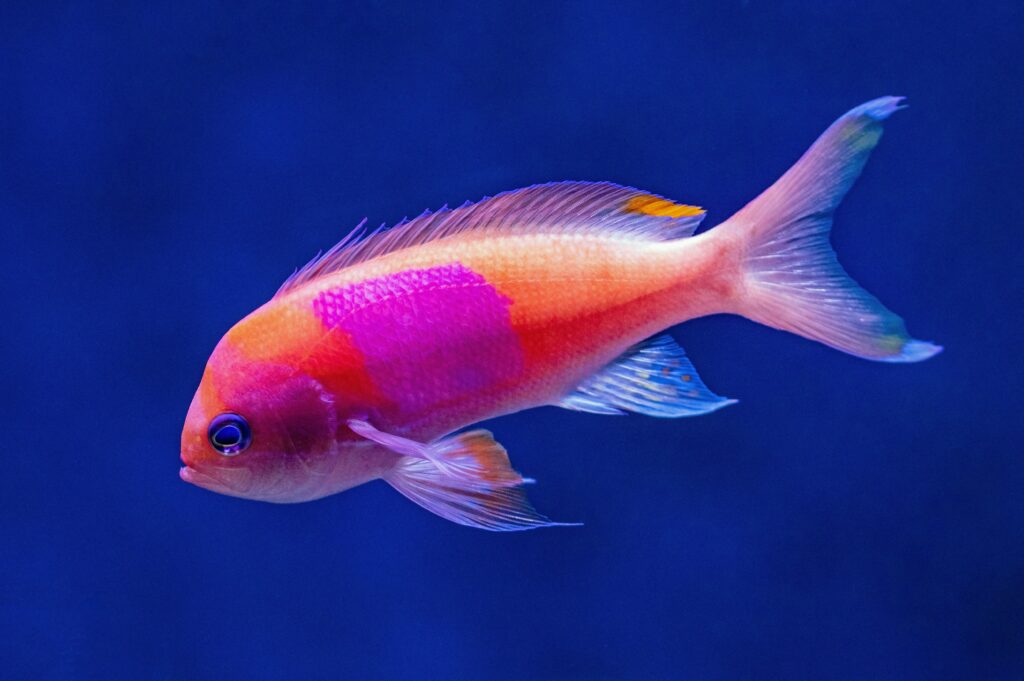
If you ever spot a Mandarin fish in the wild, count yourself lucky. Found in shallow reefs across the Philippines and parts of the South Pacific, these tiny saltwater creatures look like living artwork neon blues, electric oranges, and greens in flowing patterns across a compact frame. But their beauty is also the reason they’re rarely caught in the wild. Their vivid colors make them easy to spot by predators, so they stick to hiding. Add to that their shy, slow moving behavior and daytime activity, and you’ve got a fish that doesn’t end up in nets often.
What’s more, they’re delicate. Mandarin fish don’t do well with rough handling or irresponsible collection methods. That’s where sustainable aquarium practices come in. Instead of snatching them from reefs, responsible breeders now replicate their habitat and behaviors to raise them in controlled environments. This matters not just for the species, but for reef ecosystems they help support.
The Mandarin fish may not be the biggest or hardest fighting catch. But it’s one of the most visually arresting and a reminder that rarity isn’t always about size or danger. Sometimes, it’s about not disrupting something beautiful that barely wants to be seen.
Coelacanth Capture off the South African Coast
A Living Fossil Resurfaces
Once believed to be extinct for over 65 million years, the discovery of a living coelacanth in 1938 shocked the scientific world. This deep sea dweller became an instant symbol of how little we truly understand about our oceans.
First modern sighting: 1938 near the Chalumna River, South Africa
Estimated to have existed since the time of dinosaurs
Often found at depths exceeding 600 feet
What Makes the Coelacanth So Rare?
Sightings or captures of coelacanths remain extremely uncommon. They dwell in volcanic slopes or caves along the ocean floor, making them difficult to study or track using traditional marine practices.
Unique features include limb like fins and a hinged skull
They’re classified as “critically endangered” due to low reproduction rates and habitat risks
Why Scientists Are Still Obsessed
Far from being a historical footnote, the coelacanth continues to rewrite what we think we know about vertebrate evolution and survival.
Offers insights into early vertebrate limb development
Challenges assumptions about marine extinction events
Serves as a benchmark in deep sea biodiversity research
The coelacanth’s story is a testament to the enduring mysteries of the ocean and a reminder that nature still guards ancient secrets beneath the surface.